
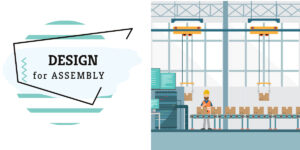
In today’s fast-paced manufacturing landscape, efficiency is more than just a goal; it’s a necessity. Companies are continually searching for methods to streamline their production processes, reduce costs, and enhance product quality. One approach that has been gaining traction and proving its worth is Design for Assembly (DfA). At Tebots Inc, we understand the importance of DfA in optimizing design, improving manufacturing efficiency, and ultimately delivering a superior product to our customers. In this blog, we’ll explore what DfA is, its key principles
, and how it can benefit your business.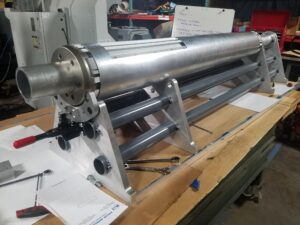


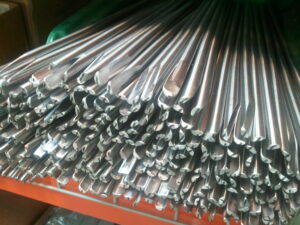
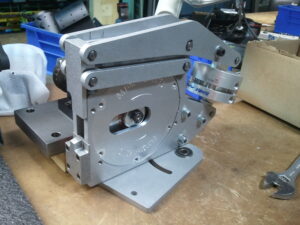
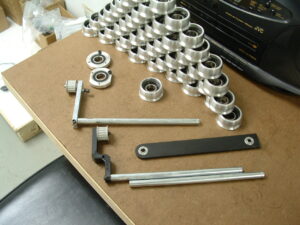
Design for Assembly is a design approach that focuses on simplifying the assembly of products by minimizing the number of parts, optimizing part orientation, and making sure that the components are easy to handle, identify, and assemble. It emphasizes designing products in a way that makes them easy to assemble, reducing labor time and chances of error while increasing overall productivity.
For a deeper dive into the foundational concepts of DfA, you can find clear explanations of DfA principles from academic sources, such as the University of Arkansas’s Introduction to Mechanical Design and Manufacturing https://uark.pressbooks.pub/mechanicaldesign/chapter/design-for-assembly-principles/.
The core principles of DfA include:
- Minimizing Part Count: Reducing the number of individual components simplifies the assembly process, lowers material costs, and reduces inventory management complexities. This often involves combining multiple functions into a single part. For example, instead of using separate fasteners and brackets, a single molded part might integrate both features. Research has shown that applying DfA can lead to significant reductions in part count and improved design efficiency.
- Standardization of Parts: Utilizing common, off-the-shelf components whenever possible can significantly reduce design and manufacturing time, as well as procurement costs. Standardized parts are also typically easier to handle and assemble.
- Modular Design: Breaking down a complex product into smaller, self-contained modules that can be independently assembled and then combined. This approach allows for parallel assembly processes, which can drastically cut down overall production time.
- Error-Proofing (Poka-Yoke): Designing parts in a way that makes incorrect assembly difficult or impossible. This could involve asymmetrical designs that only fit one way, or features that guide the part into its correct position. Learn more about the Poka-Yoke concept and its application in manufacturing from quality management resources like the American Society for Quality (ASQ) https://asq.org/. Further insights into designing for Poka-Yoke assembly can be found in papers such as “DESIGN FOR POKA-YOKE ASSEMBLY AN APPROACH TO PREVENT ASSEMBLY ISSUES” from The Design Society.
- Ease of Handling and Insertion: Ensuring parts are easy to grasp, orient, and insert without excessive force or special tools. This includes considering factors like part weight, size, symmetry, and potential for tangling.
The benefits of implementing DfA are far-reaching:
- Reduced Assembly Time and Costs: Fewer parts and simpler assembly processes directly translate to less labor time and lower manufacturing overheads.
- Improved Product Quality and Reliability: With fewer opportunities for error during assembly, the overall quality and reliability of the finished product are enhanced. This also leads to a reduction in rework and warranty claims. A comparative analysis of DfA guidelines, like the one found on ResearchGate https://www.researchgate.net/publication/385590578_A_Comparative_Analysis_of_Design_for_Assembly_and_Design_for_Disassembly_Guidelines, underscores the importance of these design considerations.
- Faster Time-to-Market: Simplified designs and efficient assembly processes accelerate the entire product development cycle, allowing companies to bring new products to market more quickly.
- Enhanced Manufacturability: DfA inherently considers the manufacturing process from the design stage, leading to designs that are inherently easier and more cost-effective to produce.
- Lower Inventory Costs: A reduced part count directly impacts inventory levels, leading to lower holding costs and less capital tied up in stock.
In conclusion, Design for Assembly is not just a design methodology; it’s a strategic imperative for any modern manufacturing business aiming for operational excellence. By integrating DfA principles early in the product development cycle, companies can unlock significant efficiencies, reduce costs, and deliver higher-quality products to their customers. Embrace DfA to transform your manufacturing process and gain a competitive edge in today’s demanding market.
Ready to optimize your product designs for superior assembly and unlock significant cost savings? Contact Tebots Inc today for a consultation and discover how our expertise in Design for Assembly can revolutionize your manufacturing operations.